


Why Does Your Health Insurance Premium Keep Climbing?
The System Is Designed for You to Lose. Here’s What to Do About It.
Even in a clean year, your health insurance premiums went up. No major claims. No catastrophic diagnoses. Just another renewal letter with a number that made you wince.
Here’s why that happens, and why no one with a commission check is going to explain it to you.
You’re in a pool you can’t escape.
In California, any business under 100 employees is classified as a small group. That means you’re subject to ACA standardized pricing across four tiers: bronze, silver, gold, platinum and you’re blended into a risk pool with every other small group in the state. Clean year or dirty year, it doesn’t matter. Your rates are averaged against everyone else’s. Before the Affordable Care Act, healthy groups could receive up to a 10 percent discount. That flexibility is gone. Now everybody gets the same rate.
Under 20 employees? Your negotiating power on health insurance is zero. Not limited. Zero.
Your broker got a raise. Did you know that?
In the small group market, brokers are paid a flat 5 percent commission on your medical premium. Want to know what your broker made off you last year? Take your monthly bill and multiply by 0.05. Now annualize it.
Here’s where it gets interesting. When your premiums went up 20 percent, your broker’s income went up 20 percent. Automatically. No conversation, no disclosure, no performance review. The rates are filed with the California Department of Insurance. The commissions move with them.
Most brokers make more annually than primary care physicians in the state of California. That’s not an opinion. That’s the math.
The question most practice owners have never thought to ask their broker: So, how does your compensation change when my rates go up?
Watch what happens.
One more thing worth knowing: while medical commissions are fixed at 5 percent, commissions on ancillary coverage, dental, vision, life, disability, are fully negotiable. Many brokers charge 10, 15 percent or more on those lines. That’s where you actually have leverage, and most people never use it.
The tool most small practices have never seriously considered.
If you’re under 20 employees competing for the same medical assistant as the hospital-owned practice down the street, you are losing on benefits. Full stop. The large system offers richer plans, better structure, more coverage. When wages are equal, benefits are often the tiebreaker.
A Professional Employer Organization, a PEO, levels that playing field.
A PEO consolidates your administrative operation into a single touchpoint: payroll, benefits, workers’ comp, HR support, safety training, Cal OSHA compliance, and onboarding technology. The benefit packages available through a PEO are structured like those of a large hospital system or private equity firm. For a practice running on razor-thin margins, that’s not a small thing.
The administrative burden reduction alone is worth the conversation. When a practice manager isn’t cobbling together three separate vendors with duct tape and bubble gum, they have time to actually focus on revenue cycle management, following up with Blue Shield, United Healthcare, Aetna, and potentially seeing one more patient a day.
So why aren’t more practices doing this? Because for 15 or more years, PEOs built their own direct sales forces and bypassed the broker channel entirely. Brokers noticed. They pushed back. And if your broker is also your brother-in-law, that conversation probably happened over wine and ended quickly.
Here’s the other reason: if recommending a PEO cuts a broker’s commission portfolio by 25 to 40 percent, they are not recommending a PEO. The incentive to keep you exactly where you are is baked into the structure.
What’s coming that you need to watch.
The commercial health insurance market, which represents more than 50 percent of an independent practice’s revenue, is starting to shift. Pre-authorization friction is loosening. UnitedHealthcare recently announced that 99 percent of pre-auths are now auto-approved. That’s a signal.
More significantly, VC-funded direct primary care networks are quietly being built for large self-funded employers who want to pay physicians directly, bypassing traditional insurance entirely. Mark Cuban’s Cost Plus Health is part of this conversation, but it goes well beyond one brand. Independent physicians who want to be part of high-value networks need to be paying attention.
Employer-based health insurance plans are also starting to sue their insurers. A $100 million settlement between the New Jersey Health Plan and Blue Cross Blue Shield Horizon is public record. It won’t be the last. Forensic audits of billing practices on both sides of the equation are increasing.
The physicians who will navigate this well are the ones who have freed themselves from administrivia. Get the operational house in order. Evaluate a PEO. Then lift your head and look at what’s coming.
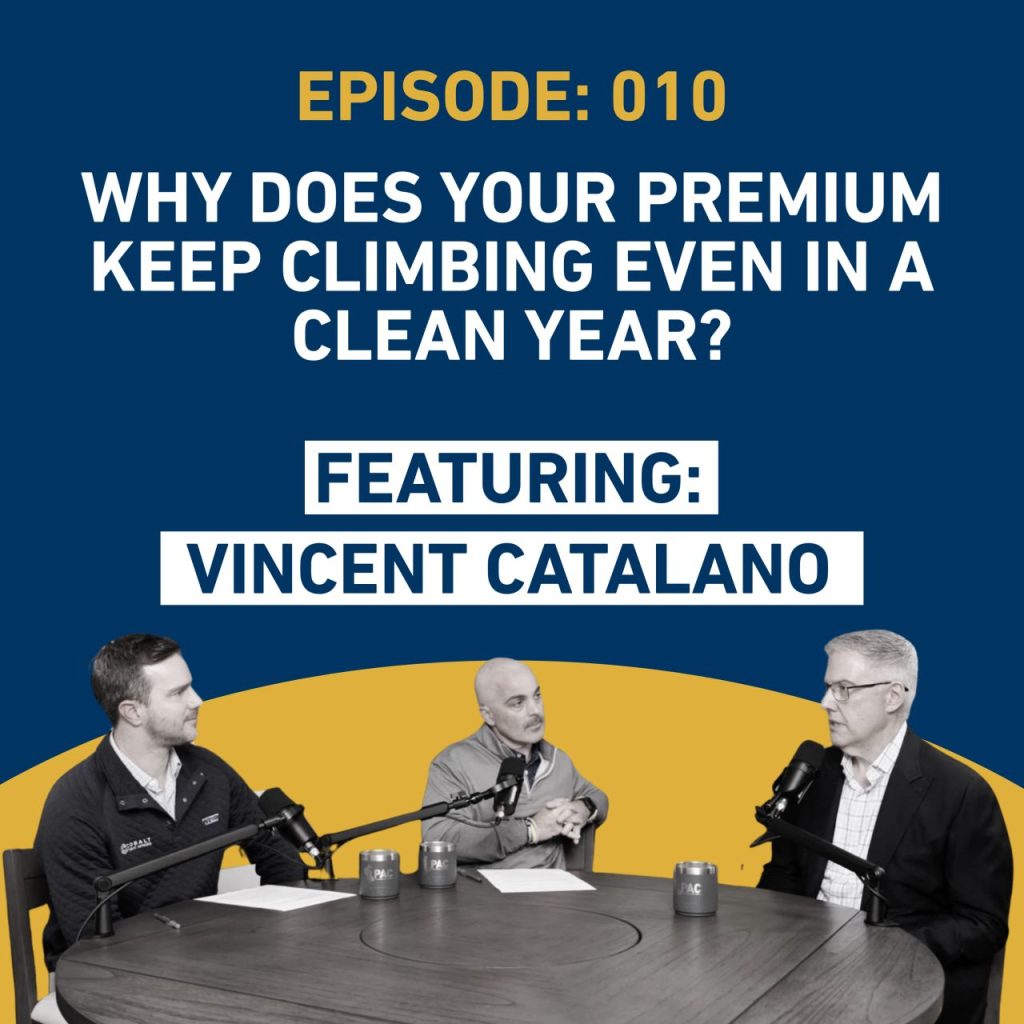
We break all of this down on a recent episode of the PAC & Forth Podcast by the Physician Association of California. If you pay for benefits and have ever wondered where the money actually goes, this one’s for you.
Listen now: 🎧 Spotify 🍎 Apple Podcasts ▶️ YouTube
About Vincent Catalano & CLEAR Healthcare Solutions
Vincent Catalano is the founder and CEO of CLEAR Healthcare Solutions and host of The CLEARly Beneficial Podcast. With over 23 years of experience in employee benefits and insurance brokerage, including time at Arthur J. Gallagher, Catalano founded CLEAR Healthcare Solutions to provide independent, unbiased healthcare benefits consulting. His unique position outside corporate constraints allows him to have frank conversations about healthcare issues that others can’t address. New episodes release weekly on Tuesdays at 8 a.m. across all major platforms. Learn more at www.clearhcs.com or read more on the blog.
Disclaimer: The information provided in this podcast is for educational and informational purposes only and should not be construed as legal, financial or professional advice. Listeners should consult with qualified professionals regarding their specific situations.
Want more conversations like this one? Vincent covers topics like these weekly on the CLEARly Beneficial Podcast.
- Buzzsprout: https://www.buzzsprout.com/2526095
- Substack: https://clearlybeneficialpodcast.substack.com
- YouTube: https://www.youtube.com/@CLEARlyBeneficialPodcast